It was my turn to cook and, midway through preparing dinner, I realised I’d forgotten to buy carrots (again). Cursing, I cut a rather frustrated figure as I hurried down to our local store, conscious that the potatoes might boil over before I got back.
On arrival, by now with a bit of a sweat on, I found myself unable to get to the carrots on account of another man ahead of me. This never happens. Not at this store. I could feel my blood pressure rising.
This man, in no particular rush, I should add, was busy picking his carrots. Each one he picked up was, well, a carrot. Nevertheless, it turned out that only some carrots were worthy. Several were picked up, inspected, turned over and returned to the pile. Eventually, perhaps sensing the incandescent rage building behind him, he settled on what must have been five or six just-right carrots and scuttled off down the aisle to eye up the broccoli.
Checking that no one was watching, I found myself doing much the same as the man before me: picking up carrots, giving them a once-over, rejecting a few and eventually selecting five or six of my own. Some of the carrots I’d chosen were clearly not right for the man before me. And, as it turned out, some of his rejects were perfectly acceptable to me.
I paid, grateful that my nemesis was still in aisle four trying to pick out the just-right potatoes, and hurried home.
It occurred to me later, in the calm and soothing act of mashing my potatoes, that we had been shopping in the same supermarket, looking at the same carrots, but had arrived at rather different conclusions about what counted as just right.
Obviously, it got me thinking about Goldilocks…
The Problem with Just Right
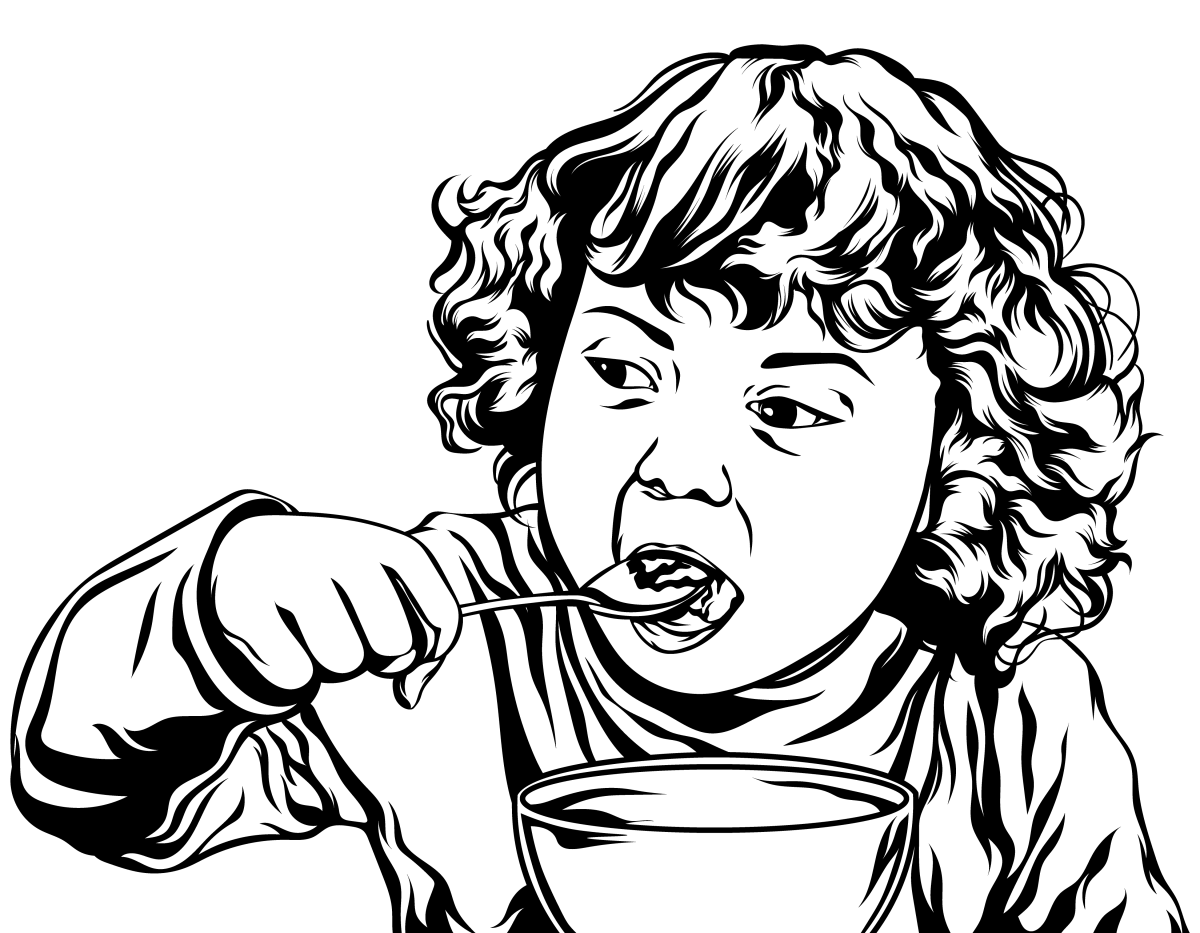
I think we’re all familiar with her story. Goldilocks tries the bears’ porridge, chairs and beds until she finds the one that is just right. Then comes the usual fairytale ending, where all is well because, well, there’s only one Goldilocks in the story.
Imagine, instead, that three Goldilocks walked into the bears’ house. Would they all agree on the same porridge, the same chair and the same bed? Maybe, maybe not. I’ve always suspected that Goldilocks was a bit self-centred and selfish, so perhaps they’d end up bickering and scrapping over who gets what. I digress, but I’d genuinely love to read that version of the tale!
I couldn’t resist putting some numbers on the probabilities of pleasing all three Goldilocks in the bears’ house. Suppose each has an equal chance of preferring one of three options: too hot, just right or too cold (in the case of the porridge). The probability of all three Goldilocks agreeing on one item is 1 in 9. But across all three items, it falls to a highly improbable 1 in 729. We’re almost guaranteed a Goldilocks shoot-out. Game on!
I’m not done with my story, or my cooking…
As I chop the carrots, I’m trying to work out how many I need to prepare for the five of us. The twins will eat more than my daughter, but I’m not that hungry tonight, and Mrs will have about the same as our daughter. I think. It’s never quite the same, and I rarely get this calculation right anyway.
So, it’s 1 in 729 for three Goldilocks.
But what if we were dealing with 25 Goldilocks in a classroom? How would we manage to help each of them get things just right?
The maths is rather beyond my competency here, but I’m sure our IB Diploma Maths AI students would confirm that the probability of everyone agreeing on all three items is approximately 1 in 2.26 × 10³⁴. That’s a number so big it has more zeros than the US national debt.
Either way, it’s looking like certain Goldicide!
I should also point out that there’s around a 60% chance that at least one of the other 24 Goldilocks will share the first Goldilocks’s preferences across all three items. So, while agreement on what is “just right” isn’t particularly unusual, finding everyone in agreement is.
And yet, in education, we spend an awful lot of time trying to do just that.
Trade-offs
Students arrive with different starting points, interests, aptitudes and preferences. The same lesson, delivered by the same teacher and following the same curriculum, can produce 25 quite different experiences.
Indeed, curriculum design is nearly always an exercise in compromise. Take Depth, Breadth, and pace, for example: a familiar curriculum trilemma faced by schools worldwide.
Time is often the fixed variable. Spend longer exploring an idea (depth) and something else needs to be squeezed out. Cover more ground (breadth) and you risk skimming the surface. Move too quickly (pace) and some students struggle; slow things down and others risk losing interest or challenge.
There isn’t a perfect answer. These are genuine trade-offs, not problems that can simply be solved by better planning (or AI). That’s the nature of a trilemma.
Yet parents, quite understandably, want things to be just right for their children. The right teacher, the right level of challenge, the right support and the right opportunities. The difficulty, of course, is that every parent is advocating for their own darling Goldilocks. And, as we know, what works particularly well for one child may well have consequences for the one sitting next to them.
Perhaps, though, this raises a more profound question about our pursuit of just right.
It’s tricky living in our new world of carefully curated outcomes. Jonathan Haidt’s The Anxious Generation has prompted an important conversation about childhood, risk, independent play and the pressures facing young people. But it’s also worth asking whether the trends Haidt identifies are affecting more than just our children. What about us adults and the institutions entrusted with their education? Anxious teachers, anxious parents, anxious leaders…
Perhaps this is finding its way into our classrooms, too. Students want reassurance that they are on the right track. Parents want their children to have the right teacher and the right level of support. Likewise, schools find themselves under pressure to personalise learning and explain their choices of pedagogy, curriculum and the decisions they make along the way. Decisions that might be just right for some, but too much or too little for others.
None of this is inherently wrong. Schools must carefully consider how they respond to questions and pressures from their communities. I discussed this recently [here]. Schools will increasingly need to “show their working” on the trade-offs they make, because trying to please everyone will ultimately please no one. Schools should be prepared to explain why their choices are intentional (when that is the case) and have the confidence to uphold them, while also being wise enough to know when to adjust their stance.
A school that places a particular emphasis on holistic education, for example, or leans into concept-based learning and teaching, or is strongly influenced by self-determination theory, may look and feel rather different from one that places greater emphasis on academic rigour and examination results. Neither is necessarily right or wrong. But they are making different choices, and those choices have different consequences.
So how do we solve a problem like Goldilocks?
I think we need to stop trying to make everything just right.
We make thoughtful choices, create different routes into challenging learning, and accept that not everyone will have quite the same experience. Sometimes learning should feel comfortable; sometimes it should stretch us. The trick is knowing when each is needed.
I keep thinking about those carrots…
That man didn’t need every carrot in the supermarket to be perfect. He needed a handful that worked for him. Moments later, I needed a different handful. We were both perfectly happy with our choices.
Later, serving up supper, I couldn’t help but suspect that Goldilocks would have had something irritating to say about the size of my sliced carrots.
Or maybe I’m being too harsh on Goldilocks. After all, she was just looking for something that worked for her. And perhaps I should extend the same leniency to the man in aisle four. We all have our preferences, after all.
The truth is that my problem with Goldilocks is not that she’s fussy. It’s that she never had to deal with a world where there might be 24 other Goldilocks to consider.
Bon appétit.
Haidt, J. (2024). The Anxious Generation: How the Great Rewiring of Childhood Is Causing an Epidemic of Mental Illness. Penguin Press.
Discover more from Serendipities
Subscribe to get the latest posts sent to your email.

