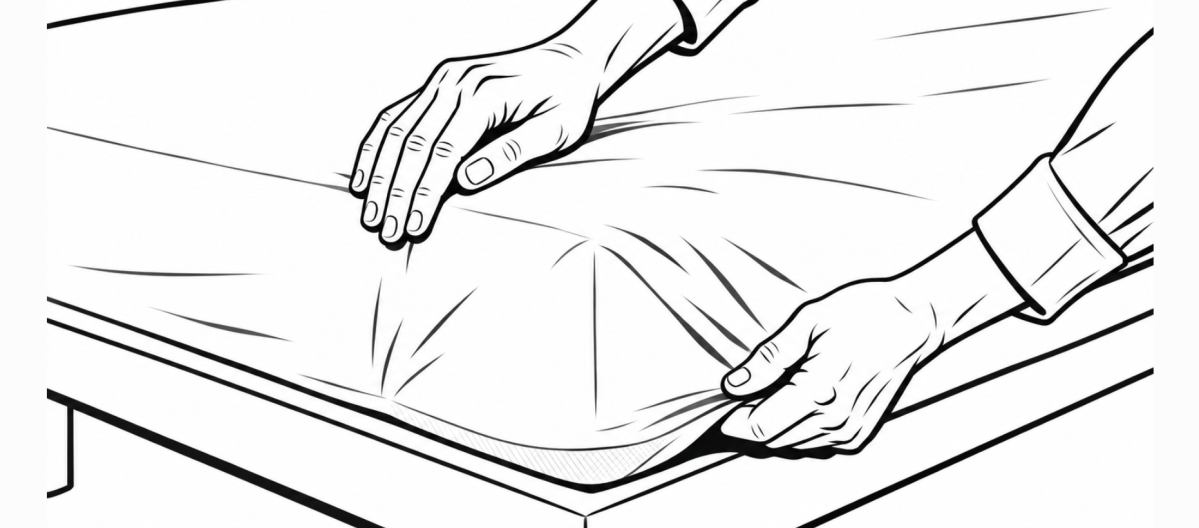
“If you want to change the world, start off by making your bed.”
Admiral William H. McRaven, delivered during his May 17, 2014, commencement address at the University of Texas at Austin.
Make Your Bed
It seems I’ve come rather late to the party, as I’ve only just watched Admiral McRaven’s Make Your Bed speech (along with 21 million others). It popped up on my YouTube feed. I loved it.
Drawing on his experience of basic SEAL training, McRaven makes a wonderfully simple case for making your bed each morning. It means you’ve already accomplished the first task of the day. It gives you a small sense of pride and, perhaps more importantly, a little momentum. One completed task encourages you to tackle another, and then another. By the end of the day, that first small achievement may have become a whole series of them.
But there’s another reason for making your bed that I particularly like. McRaven recalls that, even if the day turns out to be miserable, you will eventually return home to a bed that is made. Something familiar, something you have done well, and a small source of comfort after what has probably been a difficult day.
It’s really good, isn’t it? Making your bed isn’t really about making your bed.
(Or Don’t)
It got me reminiscing about my own experience of making beds during basic training as a Sandhurst Officer Cadet.
There are two things in life that still make me nervous. The first is the prospect of having my room inspected for its cleanliness and general correctness. The second is the Colour Sergeant who might be conducting that inspection.
As a military virgin, I remember my first platoon lines and room inspection uncomfortably well. We all knew it was coming. 0700 hours. Most of us were up hours earlier preparing for it. Socks were folded so that, when you opened the drawer, they would be “smiling”; combat fatigues were ironed and hung with precise finger-width gaps between the hangers; washbasins had to be dry, without a watermark; and there wasn’t to be a speck of dust that a white glove might collect.
And, yes, the bed was the showpiece.
Hospital corners, sheets pulled tight, everything looking rather immaculate, and then a load of kit laid out on top, including boots polished to a mirror shine and, I seem to recall, a rather random brass belt.
That first morning, I thought I’d done a pretty good job.
Alongside the rest of my platoon, I stood outside my room, to attention, waiting for our (immensely intimidating) veteran Colour Sergeant. On arrival, I took my turn to proclaim, loudly and boldly, my name, rank and number. I then held my nerve as he invaded my personal space to check that my uniform was correctly ironed and that I was without stubble, before striding into my room to inspect my handiwork.
He was incandescent with rage.
Through the wall, I could hear him explaining, in considerable detail and at considerable volume, just how lazy I was, how my idleness and lack of attention to detail would put soldiers on operations at risk, and how I was clearly not officer material.
Luckily, the rest of my platoon received much the same treatment. Well, apart from Luffy, who I’ll come back to shortly.
In fairness, nobody had actually told me what the required standard for bed-making was. But even as naïve as I was at the time, I was well aware that asking for clarification would have done little to improve my standing.
It’s fair to say that I was determined not to have a repeat experience, so I enlisted the help of my blessed neighbour, Luffy, who happened to have done a load of army cadet stuff at school. He took me through the intricacies of army-bed-origami: the hospital corners, folds and tucks required to produce an inspection-safe bed.
I (he) got it right the next morning. Immaculate, apparently. I was back in the game.
And then, for the remainder of our basic training phase, I slept on the floor.
For the next few weeks, I left that bed perfectly made. I decided that the best way to avoid getting it wrong, and being shouted at, was to leave it in stasis.
I rather liked this solution.
I’m not sure the Colour Sergeant would have had he found out.
And I don’t want to know what McRaven might think.
I should be clear that I wasn’t attempting some principled stand against military bulls#!t. I was just a young officer cadet trying to avoid being shouted at. And you could reasonably argue that I’d found a way around learning to do something properly, rather than actually learning to do it.
Perhaps this is a good moment for this story to pivot towards schools.
What’s the Point?
The first thing I’d say is that the act of making one’s bed isn’t really the point. It’s a means to an end. It’s about the why. And McRaven gives us a big, sticky, unmistakably clear why: to provide a simple sense of accomplishment to build on.
Schools are full of beds to be made.
Arriving to class on time and being ready to learn. Completing homework. Bringing the right equipment. Meeting a deadline. Listening carefully, contributing to a discussion, taking responsibility for your own learning. Advocating for yourself and others. Eating and sleeping well.
These are all small acts of responsibility. They matter, not necessarily because of the task itself, but because of what they can unlock.
Students are very good at working out what schools want from them. They learn to read assessment criteria, follow instructions and meet deadlines (well… that’s another article). These are useful skills, and schools are very good at producing “excellent sheep”. But there is a difference between doing something because you understand its value and doing it simply because someone has told you to.
Perhaps we become so focused on compliance that we forget to explain the point of it. We give students lists of requirements, success criteria and instructions, but don’t always spend enough time explaining why they matter. We can end up rewarding the perfectly made bed without ever asking whether the student understands why they are making it.
Of course, the answer isn’t to abandon the beds. There is real value in learning to do things properly, developing good habits and taking pride in work that might otherwise seem mundane. McRaven is right about that. And my Colour Sergeant, God bless him, probably was too.
Perhaps that’s the point. We want students who can make their beds properly, but who also understand why they’re making them. The discipline to do the things that matter, and the confidence to question whether there’s a better way.
As for me, I eventually left Sandhurst knowing how to make a rather good bed. And, more importantly, how to keep it that way!
Discover more from Serendipities
Subscribe to get the latest posts sent to your email.

