Field Notes from Bari, Italy, 2026
One of my children steadfastly holds that school is “the opposite of holiday.”
This is mildly problematic when one happens to be a school principal.
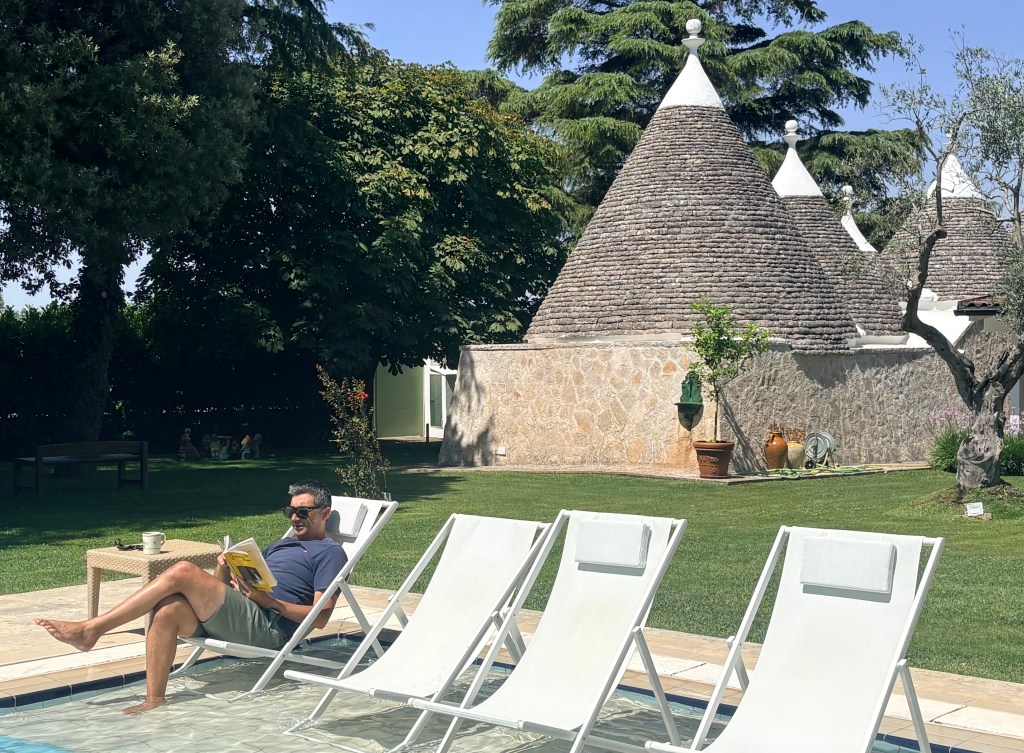
Unfortunately, she’s making a compelling case, and sitting by the pool in Italy this week, I’m still mulling that over.
There is something rather wonderful about holidays. They give us permission to think slowly. Of course, sunshine, wine and being miles from normality help with that. Either way, my attention has once again drifted towards questions about systems.
The Trulli Houses
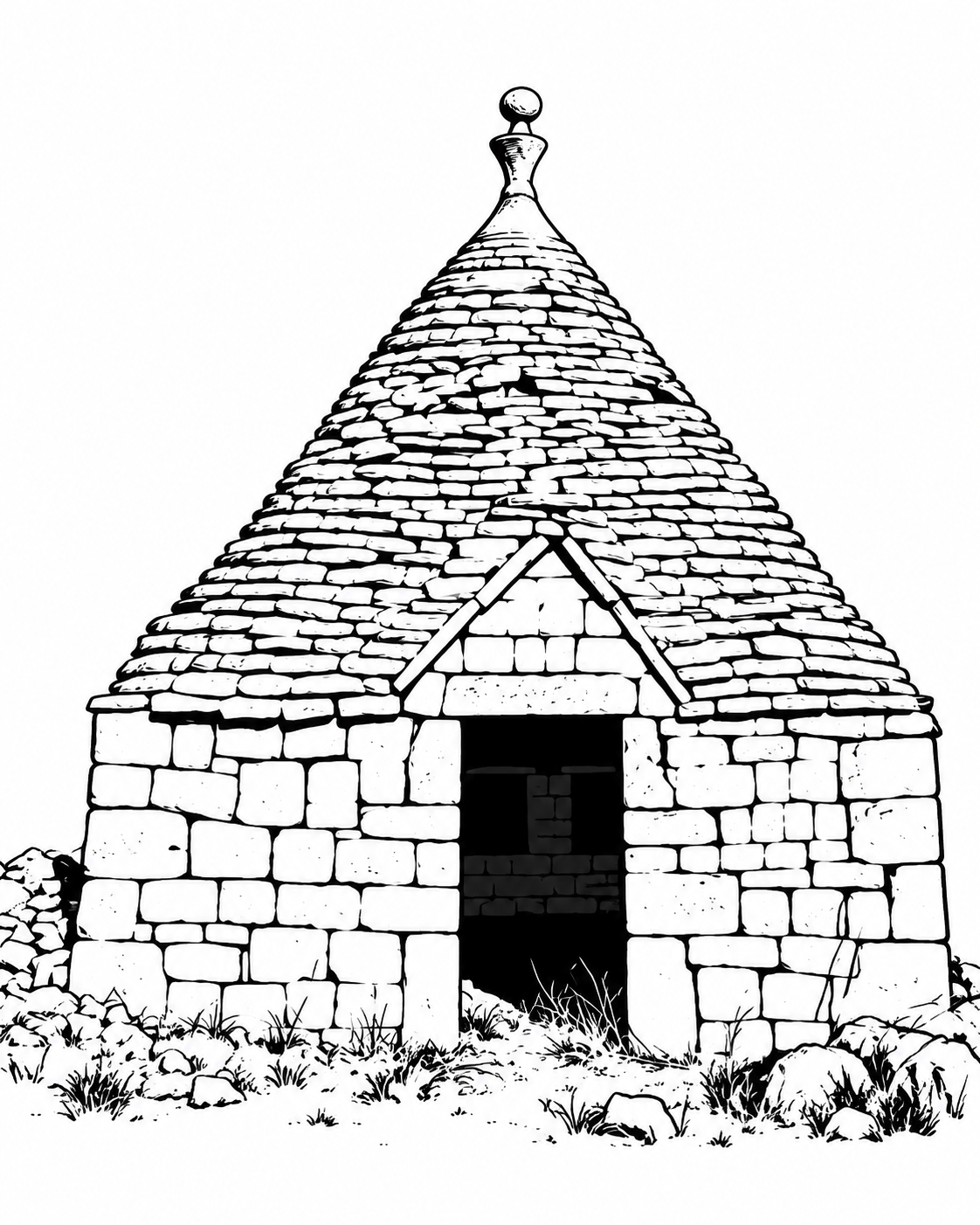
We’ve just visited the Trulli houses in Alberobello, Italy. They are a UNESCO World Heritage Site, and not surprisingly, are among the most beautiful buildings I have ever seen. I was hoping that my kids would feel the same, but alas, the most excitement arrived when one of them shared with me that their peculiar uniqueness, the distinctive conical roofs, was because somebody didn’t want to pay their taxes.
The story goes that in the seventeenth century, the local Count wished to avoid paying taxes to the Kingdom of Naples on permanent settlements. His solution was simple. Don’t build permanent houses. So the Trulli were constructed using dry stone techniques, without mortar, so that they could be dismantled quickly should the King’s tax inspectors arrive. No permanent houses meant no settlement tax. By all accounts, the roofs could be removed in a matter of hours, transforming a taxable village into what appeared to be nothing more than a collection of rather unfortunate piles of stones.
And so what began as a tax avoidance strategy has become one of Italy’s most celebrated architectural treasures, and a great story to keep the kids entertained. And whether every detail of the story is entirely true or has become slightly embellished over the centuries almost doesn’t matter because the lesson remains the same.
Tax didn’t simply determine how much people paid. It determined what people built, and it shaped the physical landscape across the region. Centuries later, thousands of tourists (including me) wander through Alberobello marvelling at buildings that exist because somebody changed the incentives.
These marvellous Trulli houses weren’t built despite the tax system, but because of it. And so as I sit here by the pool, I’m wondering how true this is of so many other things in life. We are inclined to think that people shape systems, but perhaps the opposite is more true.
Perhaps that’s the Trulli Principle…
Form follows incentives.
Sometimes, it just happens that the incentive is tax.
The World Cup
No, football isn’t coming home. We hit the metaphorical Wonderwall. Again.
My team, England, achieved par at this World Cup. As much as I would have loved them to win it (and I think they could have done on their day), Spain and France were the best teams at the tournament. Thomas Tuchel, my twelfth England football manager, will, despite the noise, hopefully be given more time to shape and improve the team before the next big one.
I was sceptical about some of the changes made to the format of the World Cup this year: the expanded number of countries, the effect this might have on the competitiveness of the group stages, the hydration breaks, and some of the tweaks to VAR, which now necessitate having ten match officials assigned to each game. Ten. I find that ludicrous.
Indeed, I think there are much better ways to improve football. Arsène Wenger has long advocated an offside “daylight” rule, which would favour attackers and encourage more adventurous play. I would also introduce a ten-minute sin bin for players who show dissent towards referees. It works remarkably well in other sports, for goodness sake. And just as football transformed itself with the back-pass rule, we have got to find a way to make corners quicker, less choreographed and less dependent on all the mud wrestling that now takes place in the penalty area.
I really do think these small changes would make the game better. But, of course, I’m sure there are very good reasons why things are the way they are. After all, I clearly don’t possess the insights of the much-ridiculed FIFA President, Giovanni Vincenzo Infantino.
What strikes me, however, is that football’s greatest changes have often been its simplest ones. The back pass rule transformed goalkeeping, and three points for a win encouraged more attacking football. The game didn’t change because the players changed. It changed because the rules of the game changed.
Perhaps we get the football we design too?
British Prime Ministers
Andy Burnham, congratulations on becoming my twelfth Prime Minister.
Curiously, I have now had exactly as many Prime Ministers as England football managers. The only difference is that England have had only three permanent managers in the past decade, whilst Downing Street has changed occupants seven times.
I am not a fan of such turbulence. Objectively, it cannot be good for sound governance. But seeing as there is very little I can do about it, I will join many people (outside Manchester, at least) in sitting patiently on the fence to see how he gets on. I want it to work out well. I want Britain to become more equitable and to feel like a fairer society, and I suspect he wants that too. Just as all of his predecessors did, to be fair.
We like to imagine that politics is primarily about people. If only we could elect the right Prime Minister, we tell ourselves, things would be different. Perhaps. But perhaps we underestimate the extent to which Prime Ministers themselves are shaped by the systems they inherit. Electoral cycles, media incentives, Treasury rules, party politics and public expectations all exert their own gravitational pull.
We seem surprised when politicians become short-termist in systems that reward short-term thinking. We lament performative politics in systems that reward performance. We complain about constant reform whilst simultaneously demanding constant action.
Perhaps we get the politics we design too?
Schools
If I could change three things about education tomorrow, even if it might take decades to see any impact, here’s where I’d start…
Admit by lottery above a threshold. Let the most competitive universities set a genuinely high bar, then select randomly among everyone who clears it.1 I can’t convincingly distinguish the eighteenth applicant from the nineteenth on the strength of their grades and extracurriculars, and I don’t think anyone else can either. Past a certain point we stop rewarding excellence and start rewarding the marginal advantages of birth and affluence. Merit matters enormously, but meritocracy, as it turns out, matters much less than we’ve persuaded ourselves it does (or ought to).
Cap classroom time at 75%. If architecture shapes behaviour, we shouldn’t be surprised that students become extraordinarily good at being students: that’s exactly what the current system is built to produce. I’m not proposing twenty new programmes; I’m proposing one constraint and then leaving schools to redesign the remaining 25% around play, service, apprenticeship, independent inquiry, outdoor education, and the kind of unstructured time that produces people rather than sheep.
Peg teacher salaries to the highest-paid professions in each context. Not matched, pegged, so that when lawyers, bankers, and doctors are recognised, so teachers do too, automatically, without a fresh political fight every time. Every society gets the teaching profession its incentives are built to produce, and right now most societies build systems that say “teachers shape the future” out loud and then signal something else through the payslip. Salary structures shape professions the way tax structures shape rooflines.
I suspect there would be some rather interesting unintended consequences if I got my way. Suddenly, the most influential people in a country might become remarkably interested in improving teachers’ pay and conditions. The interests of society’s highest earners and its educators would become aligned. Investment in one would become investment in the other.
Perhaps we get the schools we design too?
The Trulli Principle
I’ve spent the last hour trying to work out how to round off this blog post. There is probably something ironic about that…
I increasingly wonder whether we’re too quick to attribute outcomes to people – to great teachers, poor leaders, exceptional students, failing schools and populist politicians – and not quick enough to ask what systems produced them in the first place.
One of my children probably says it better than I have here. School, she said, is “the opposite of holiday.”
Schools can’t and shouldn’t be holidays. But they could hold a little more of what holidays are actually for…time to notice things, to follow a thought that wasn’t on the syllabus, and to get absorbed in something without immediately proving progress against a rubric.
I’ve spent a week by a pool wondering whether our systems produce rather more of what we see than we’d care to admit.
I’m still mulling that over.
More wine, Sir?
- This is actually an idea put forward by Michael Sandel in his book, The Tyranny of Merit. ↩︎
Discover more from Serendipities
Subscribe to get the latest posts sent to your email.

