An old colleague said to me recently, with predictable exasperation, that students who do not hold the door open simply do not have good manners. “Manners maketh man” and all that. Forget our current crop of unhinged dictators; apparently, the real threat to civilisation is the child who lets a door swing shut behind them. In this version of the world, George RR Martin’s Hodor remains the great moral exemplar of the age.
To be fair, a small part of me still believes that a fairy dies every time a door is not held open for another. But I have also lived long enough and in enough different places to know that not everyone shares my particular script for courtesy, and that other people, with their differences, can also be right. Reluctantly, obviously, but right.
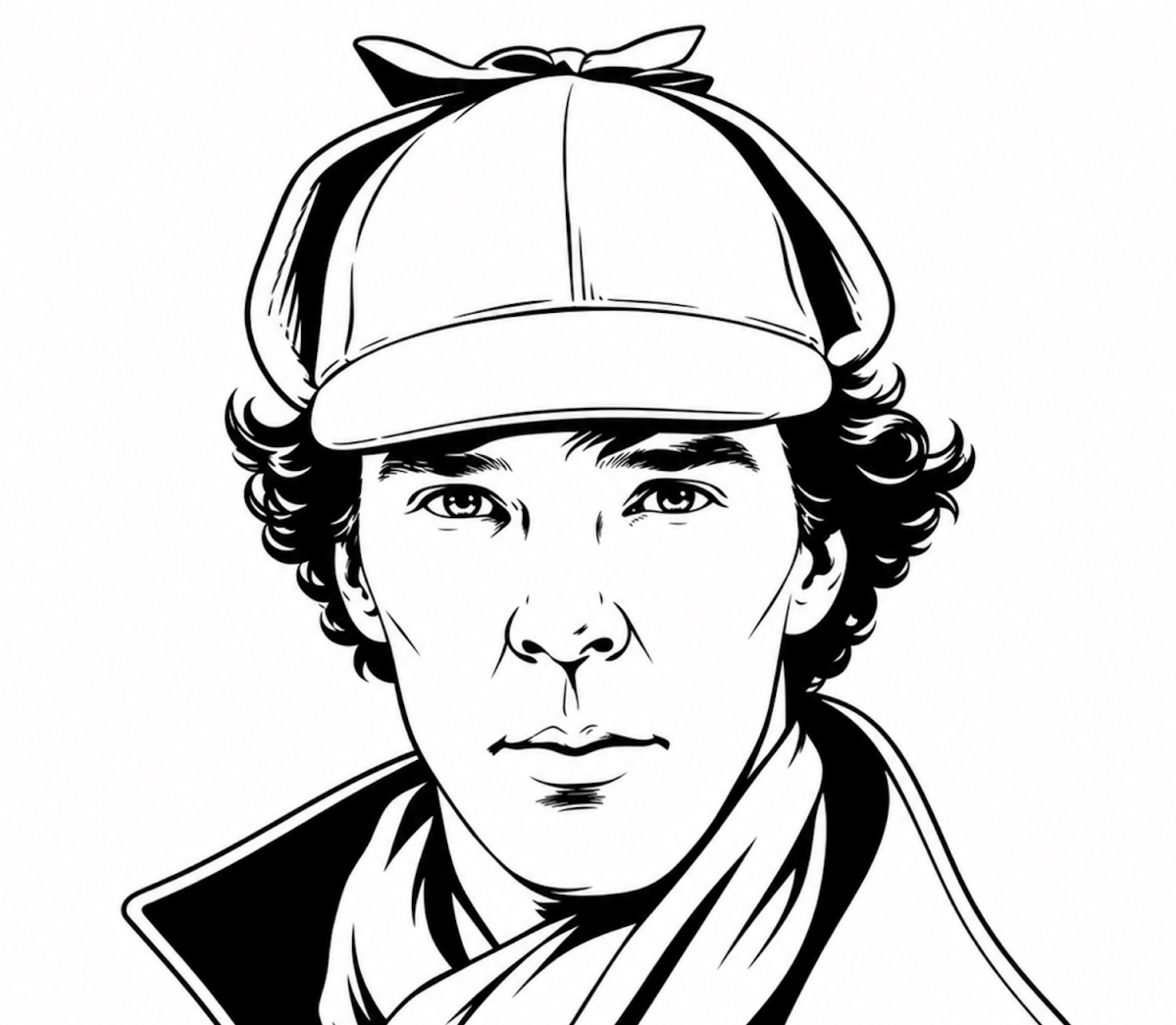
Still, let us return to the neat equation: door-holding equals manners equals humanity. I didn’t hang around to add fuel to the conversation, but I was struck by how vigorously his judgment was held, how the missed courtesy became evidence, how the unopened door became a clue, and how character had been deduced within a single moment. Sherlock himself would have admired the efficiency.
I found myself thinking about that the next morning at the school gate, although “gate” is not quite right. It is really a short flight of steps leading up to our arrival plaza. Anyhow, it was there that I caught myself doing much the same thing as my colleague the day before. The truth is that when I am standing at the front steps, welcoming students into school, and a child appears at the bottom of the steps, I often slip unconsciously into Sherlock mode…
Headphones in: unrushed, self-contained, probably just been dropped off in a car full of noisy siblings. One of three children, judging by the two smaller, resembling children a few yards behind. No eye contact: could be deference, or a hope of passing me unnoticed and unbothered. He looks too relaxed for guilt, so I settle on deference. Brushing his shirt: toast on the move, breakfast eaten in the car. Cricket bag scuffed. Mould freckles: slightly disorganised, or at least less committed to post-practice kit maintenance than the rest of the team I watched walk past earlier. Backpack far too big for him: long day, heavy load, perhaps the practical signature of two working parents and a child expected to carry everything with them. Shirt tucked, straight, but laces unfinished: someone not quite in control of the morning. Hair still damp. No “good morning”. No obvious instinct to check on his siblings or wish them a good day. The verdict is beginning to form.
By the third stair, I have not only formed a view of the poor child, but developed some fairly settled opinions about the family school run, the breakfast arrangements, and how the family cares for sports equipment. Give me another two steps, and I would probably have something to say about their breakfast choices and storage systems as well.
That is the temptation. And that is the danger.
One of the pleasures of Sherlock Holmes lies in the method. He notices what others miss and builds a story from the clues. It is a seductive habit for anyone who works in schools. Every teacher and school leader knows the feeling. A child arrives, and some part of the mind begins narrating, usually with rather more confidence than the available evidence deserves.
The trouble is that a school gate is not a good place to gather certainty. It is full of signals and short on explanation. The student who does not return my “good morning” may be discourteous. But they may also be shy, anxious, tired, preoccupied, not ready for conversation at that hour, not to have heard me at all, or not even to know what I said. The student who avoids my eye may be distant. Or they may come from a culture in which respect looks different from the one I was taught to recognise. The student with headphones in may be self-absorbed. Or they may simply be holding themselves together for the day ahead, aided by a playlist.
The point is not that observation is useless. It is that the same clues can fit many different stories. And more importantly, the story we tell ourselves in those first few seconds is almost never the whole story.
There is more in them than we know.
That is part of what Erin Meyer’s The Culture Map helps us to frame. What feels normal to us is often cultural rather than moral. In one context, direct eye contact signals warmth and respect. In another, it can feel closer to a challenge. In one setting, a ready greeting is a basic courtesy, and in another, reserve conveys its own form of respect. In one culture, speaking plainly to an adult suggests confidence and honesty. In another, it is unthinkable.
I know all this. I know, I know, I know. I have worked in international and multinational organisations for more than twenty-five years. This is part of the daily work. Take people as they are, not as we wish them to be. It is one thing to know that in theory, of course. It is another thing entirely to remember it before 7.30 in the morning.
And yet school leaders, myself included, still find ourselves trying to read people’s stories, because leadership depends so heavily on interpretation: the child walking up the steps, the parent in the meeting, the colleague in the corridor, the pause after a question posed, the one-line email, the one-page email, the body language before the words. Some of that reading is necessary. Judgement is part of the job.
But wise judgement begins in curiosity.
It is also true that sometimes our first reading is right. Sometimes a student really is being inconsiderate. Sometimes a door is not held because no thought has been given to anyone else. Sometimes a greeting is ignored not because of cultural difference or personal difficulty, but because habits of regard have not yet taken root. In a school (particularly mine), that matters as we are a community that speaks of compassion, service and responsibility. We cannot treat these small acts as trivial. The way students move through shared spaces matters. Whether they notice others matters.
So the job is not to stop judging. It is to make sure judgement is earned. We need to be able to tell the difference between unfamiliarity and unkindness, between a different social script and a failure of regard, between what needs interpreting and what needs correcting.
And that requires curiosity.
But it also requires something more uncomfortable. Not just the recognition that there is more in them than we know, but that there is more in us than we often admit. More of our own history. More of our own habits. More attachment to our own way of reading, courtesy, warmth and regard. More of ourselves in the judgement than we first realise.
That, in the end, is why this feels like a leadership question. The challenge is not only to understand the child in front of us more carefully. It is to understand ourselves more honestly as we read.
Kurt Hahn’s words return to me here: “There is more in you than you know.” At its best, that is not only encouragement for students. It is a discipline for adults. It asks us to believe that a young person is always more than the moment in which we meet them, and that we are always more implicated in our judgements than we first realise.
So yes, my colleague was right to care about manners. Courtesy matters. The held door matters. The small gestures of regard matter. But leadership asks something else of us too: that we stay curious for longer, judge more slowly, and leave room for the possibility that there is more to this child, and more to our reading of them, than first appears.
Watching is not seeing, and a good school knows the difference.
Discover more from Serendipities
Subscribe to get the latest posts sent to your email.

