Ok, given the relatively few books I read each year, it’s statistically unlikely I have actually read the best books (for education folk) in 2025.
But here’s the thing: it’s my blog post, my ball, and so I get to choose the teams!
So what follows isn’t a definitive list, but a reflective one. These are the books that mattered to me this year because they connected with questions I was already grappling with, or at least helped me see them more clearly.
And honestly, that feels like a better criterion anyway.
Here’s what I came up with:
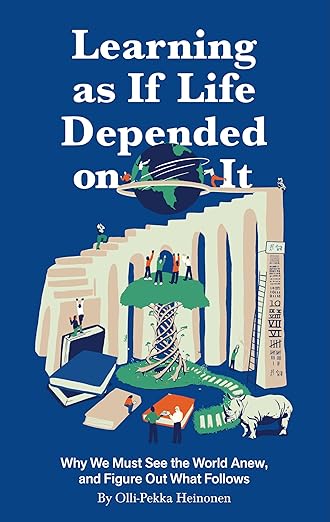
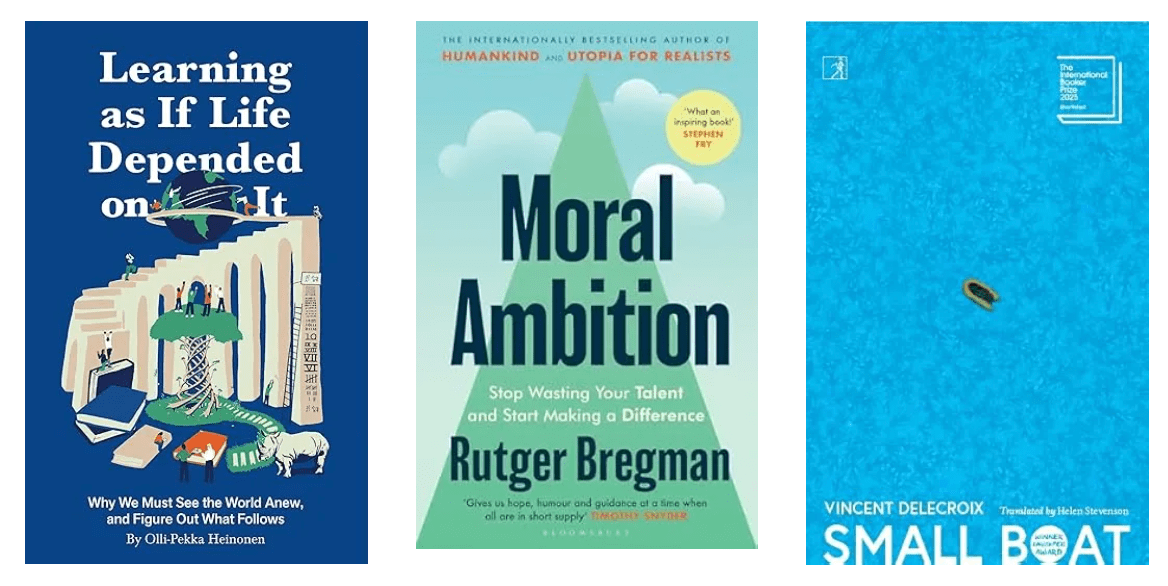
Learning as If Life Depended on It (2025)
by Olli-Pekka Heinonen
Above all, I love the title of this book. It invokes urgency.
Perhaps let’s start with the fact that this is a book written by the Director General of the International Baccalaureate Organisation. Olli-Pekka is not just any thought leader, but the thought leader of one of the world’s leading learning organisations – one that aspires to “help to create a better and more peaceful world” and “encourage students across the world to become active, compassionate and lifelong learners who understand that other people, with their differences, can also be right“. Needed now more than ever, right?
I also like that this book does not presume to answer all my questions about education and how it ought to be reformed. It forced me to think hard. I had to overcome distractions to concentrate and make connections among the various reflections and meditations (not something I find easy). And so, whether intentionally or not, any appreciation of this book required me to be a good learner, and I feel I got more from it when I took the time to discuss and debate some of the ideas with others.
It is not another book about the future of education (though it has implications for it). It is not a strategic book (although the inferences are clear). And it is not a leadership book (though leaders should read it). It is, as the title says, a book about learning – a book that suggests that the future of humanity will require each of us to behave and become the best learners we can be.
Olli-Pekka argues that the future of humanity depends less on what we know and far more on how well we learn together.
In sum, I have always felt that significant amounts of courage and a shared willingness to collaborate, innovate, and fail will be needed to steer change in education systems, and this book helped me see that more clearly, if not more urgently.
Here are a few other quotes I enjoyed:
“True exerimentation involves the understanding that there is no such thing as failure: all outcomes are valuable because they provide valuable information. Productive learning always takes place through mistakes…We must have room to learn from our mistakes, and this can only happen through a culture of psycholgical safety and trust.”
“The world’s richest people are currently competing to conquer space, looking for another planet that could sustain human life. Earth has perfect heat, light, gas, gravitational and climatic conditions for us. At an earlier age, my naive assumption was this was a fortuitous coincidence. Having appeared on this planet was like winning the lottery for the human race. But nothing is as wonderful as realising how wrong you have been; of course it is no coincidence. Humans have evolved over time in interaction with their environment, and it is we who have adapted to the environment’s conditions.”
“The amount of content to teach has been increased for so long that curricula are filled to the brim and are overflowing for teachers and students alike. The amount of time that can be spent in schools is limited, so choices have to be made. Broad skills in learning, descriptions of learner profiles, various thinking methods and learning compass models among many others can help in reinforcing the ability of children and adolescents to build their own futures.”
“Democracy is a self-correcting and self-directing model for shared decision-making, but a demanding one. To work, a democracy requires an education system that guarantees citizens the competence thye need to participate; a quality media environment that can generate reliable dialogue and situational pictures; and legislation to ensure the seperation of powers (the trias politica).”
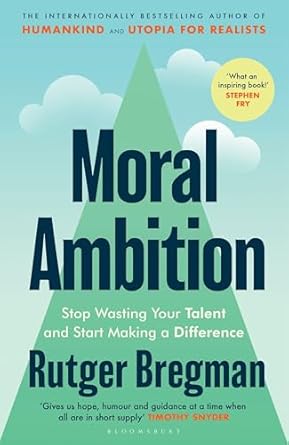
Moral Ambition (2025)
by Rutger Bregman
I love Humankind, another of Rutger Bregman’s books, because it challenges the common narrative that human civilisation is a thin skin of decency barely concealing the savage ape beneath. Rather, “most people, deep down, are pretty decent.”
Moral Ambition builds on that foundation.
Bregman’s central claim is simple: moral ambition is the desire to be among the best, but measured by entirely different standards. Not salary. Not status. Not titles or corner offices.
Instead, moral ambition is a commitment to solving the biggest problems of our time. It is about doing what matters.
That idea has lodged itself firmly in my thinking this year. It has found its way into a graduation speech, into my writing on missionocracy, and into countless conversations with colleagues about leadership, purpose, and responsibility.
But what makes the book challenging (in a good way) is that it doesn’t let anyone off the hook. It persistently asks: If you are talented, educated, and privileged, what are you actually doing with that advantage?
For educators, particularly those of us working in well-resourced schools, this is particularly awkward, as much of that advantage is often directed toward securing higher grades and pursuing elite university placements.
Moral Ambition asks us to rethink that direction.
This is a book about reframing success, redirecting effort, and taking responsibility for where our ambition points.
It has changed the way that I think about my own purpose as a school leader (in a mission-aligned school). There’s a quote that Bregman shared from another (Tyler Cowen, economist) in his book, and it is now printed on my desk:
At critical moments in time, you can raise the aspirations of other people, especially when they are relatively young, simply by suggesting they do something better or more ambitious than what they might have in mind. It costs relatively little to do this, but the benefit to them, and to the broader world, may be enormous. This is in fact one of the most valuable things you can do with your time and with your life.”
If you are a school leader looking for purpose, there you go. You’re welcome!
Here are a few other quotes I enjoyed:
“There are libraries full of books about the question of what distinguishes the doers from the non-doers, the builders from the non-builders, and the heroes from the rest. But what if moral ambition isn’t a personal quality or attribute, but rather a frame of mind? And what if that mindset is contagious– something everyone can catch?”
“Many people are more preoccupied with the kind of work they do than with the impact that work has. As long as it feels good.”
“The only person we can’t use in this fight [to change the world] is the fool who thinks good intentions are enough. Someone whose clear-eyed convictions put them squarely on the right side of history, but who achieves little in the here and now. Let’s call this figure the Noble Loser”
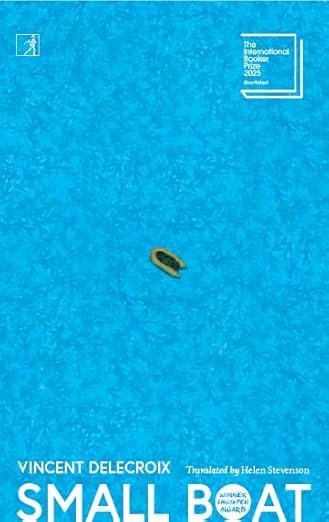
Small Boat (2025)
by Vincent Delecriox
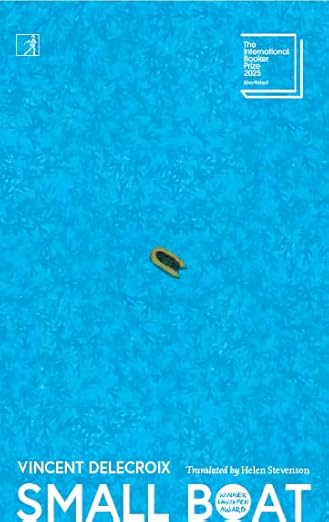
This book was short-listed for the International Booker Prize in 2025. It’s not an education book. Rather, is a short, unsettling novel inspired by real events: the deaths of migrants attempting to cross the English Channel in an inflatable dinghy. It is not sentimental. It does not offer any redemption arcs. And it does not allow the reader the comfort of distance. It’s the most uncomfortable book I have read in a long time.
Delecroix forces a confrontation with how societies see (or fail to see) suffering.
Responsibility is endlessly diffused, and no one, it seems, is fully to blame.
Which is another way of saying everyone is to blame.
Why does this matter for educators?
Because schools are preparing young people to enter precisely this world, one in which compassion is often crowded out by the noise and the need to attribute and blame.
Reading Small Boat reminded me that education is not merely about equipping students with skills to succeed within existing systems, but about cultivating the moral clarity to question those systems, and the courage to act when human dignity is at stake. It’s a story about what can happen to us when we stop paying attention.
It is not a comfortable read.
But then again, neither is the world our students are inheriting.
And that, I think, is exactly the point.
Here are a few quotes that hit me:
What sent them to the bottom wasn’t my so-called errors of judgement, or my so-called lack of humanity or my so-called incapacity to get my head round their suffering.
But when it comes to protesting and calling other people monsters, then everyone has enough breath.
Maybe they even started to sink the day they got the idea in their heads that everything would be better elsewhere, when they started to want supermarkets and child support.
So there you have it. My 3 books for school folk from 2025.
With no promises for 2026.
Happy New Year.
Follow Serendipities by Email
Enter your email address to subscribe to this blog and receive notifications of any new posts by email:
Discover more from Serendipities
Subscribe to get the latest posts sent to your email.
 Serendipities