I may be overthinking things at the moment.
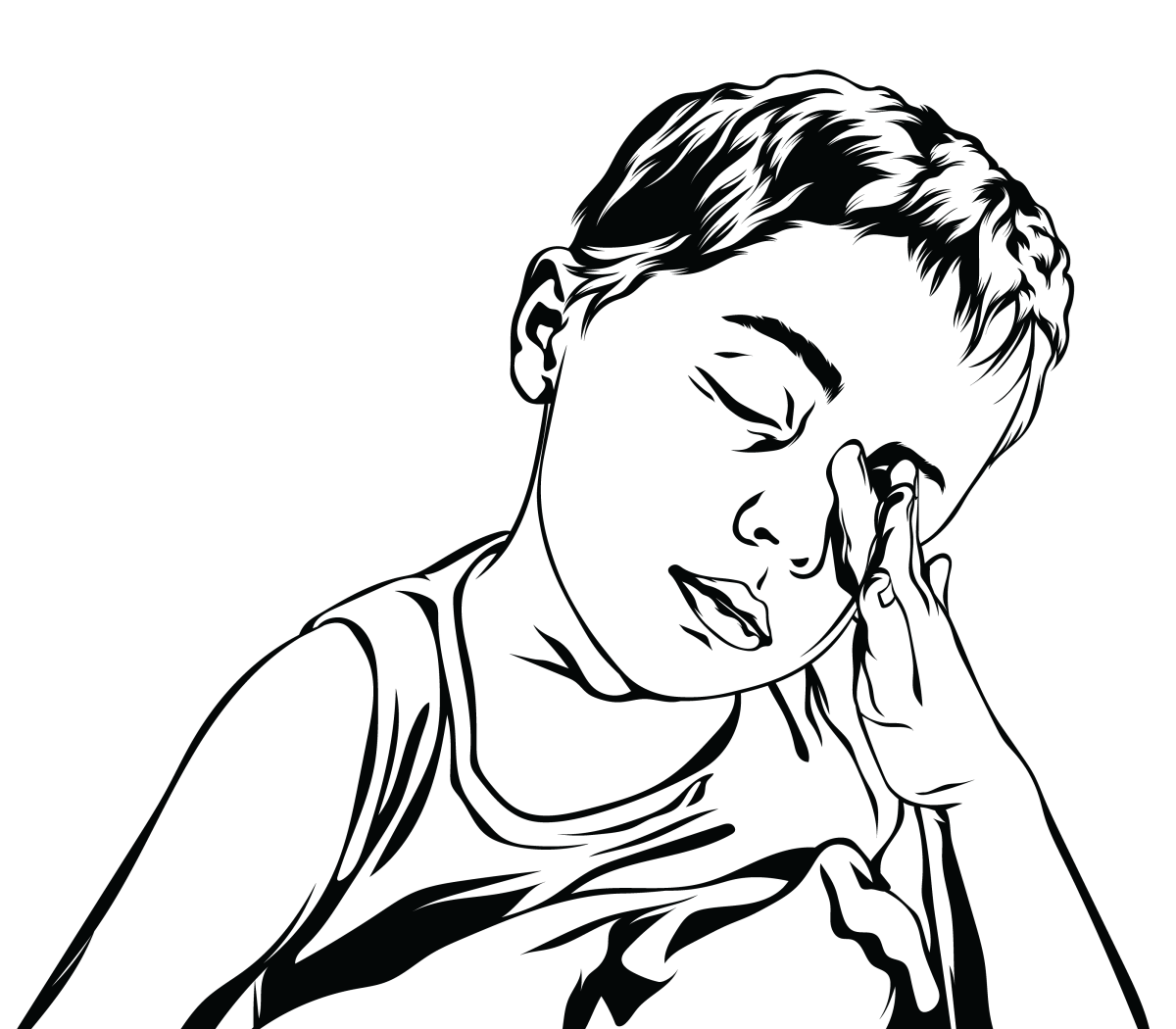
Today, I saw a boy sitting alone with his hands holding his head. He’s anxious. He’s stressed. He’s lonely.
Of course, I don’t actually know what’s up with him, but that’s what is going through my mind. Life can be hard, and I assume this is another boy feeling the strain.
Marginal Gains
In the excellent Atomic Habits, James Clear describes the importance of building the right habits and breaking the bad ones.
My favourite anecdote describes the success of the British cycling team. Between 1908 and 2003, the team had won just a single gold medal in the Olympic Games. However, things quickly turned around when David Brailsford was appointed the performance director in 2003 and introduced a principle he called “the aggregation of marginal gains“.
“The whole principle came from the idea that if you broke down everything you could think of that goes into riding a bike, and then improved it by 1%, you will get a significant increase when you put them all together”
Brailsford set about breaking down the objective of winning races into component parts.
He was looking for all the weaknesses in the team’s assumptions and all the latent problems so he could improve on each of them. For example, by experimenting in a wind tunnel, he noted that the bike was not sufficiently aerodynamic. Analysing the mechanics’ area in the team truck, he discovered dust accumulating on the floor, undermining bike maintenance. So he had the floor painted pristine white to spot any impurities. Diet, sleep, weight, fitness, training, conditioning, clothing…no stone was left unturned in the search for 1% gains.
The result was extraordinary.
Just five years after Brailsford took over, the British Cycling team dominated the road and track cycling events at the 2008 Olympic Games in Beijing, where they won a remarkable 60% of the gold medals available. Four years later, in London, the team set 9 Olympic records and 7 world records. And the relentless success was repeated again in Rio in 2016 (and in a golden streak of Tour de France winners too).
What happened after 2016? Well, after the rapid rise there followed an inevitable big fall for British cycling. Allegations of cheating, bullying, sexism, and a culture of fear all appear to be by-products of the doctrine of marginal gains.
It transpired that each glorified 1% gain was shadowed by an unsustainable 1% strain.
Marginal Strains
Whilst there have been incredible gains in raising awareness of mental health and wellbeing in our schools– it is also not difficult to see the cumulative strains in our students, staff, and leaders. Here are some that immediately come to mind:
Cumulative strains for students…
- High-stakes exam stress and anxiety (some more here)
- Perfectionism (a little here)
- Deadlines (lots more here)
- Not enough “down” time
- Not enough sleep
- Climate anxiety
- Social comparison…
Cumulative strains for teachers
- As above
- Managing student stress and anxiety
- Increasing working hours – also impacting on physical health
- Increased scrutiny – with stress and anxiety…
Cumulative strains for school leaders
- As above
- Managing staff stress and anxiety
- Increased accountability
- Diminishing goodwill from staff to keep all the plates spinning…
Individually, each of these strains is possibly manageable. However, it is the aggregation of each of these strains that is clearly impacting schools and the mental health of each and every one of us, albeit in different ways.
As a school leader, I am acutely aware that we must do everything we can to mitigate these strains.
One way, of course, is to focus on 1% gains.
If we took each of the items above and came up with something that made things just 1% better, would that be enough?
Perhaps we introduce more mindfulness activities for the students (maybe good for students, maybe not so good for teachers who need to create all the new resources and then deliver them)? Perhaps we introduce more surveys or do more research (meaning someone has to do that and then do something with all that information)? Perhaps we can employ more professional staff to support mental health (and where does the money for that get pulled from)? Perhaps, perhaps, perhaps…
Here are 3 things on my mind
ONE
For every 1% gain, I can see that we are almost always introducing another 1% strain into another part of the system. So, like the British cycling experience, we need to appreciate that things are never as simple as they might first sound.
TWO
Surely something has to give? We can not expect to continue with the mindset that we can carry on doing everything in schools the same way as we did before.
There is an uncomfortable truth we need to face – as things stand, I wonder if there is some complicity in the rise of mental health issues in our kids.
Under the name of academic rigour, kids are under (cumulative) pressure to work hard and do the needful, come what may, to achieve prestigious university places (and more of that here).
I think we will need to step back and (not to sound too much like Keir Starmer) be prepared to make some courageous, hard decisions about the purpose of education.
THREE
Mental health is not a new phenomenon. It did not arrive with COVID or mobile phones. So, how will schools adapt to become better at supporting mental health? How will schools be able to demonstrate that they do this well? What data is needed? And what can we do with it when we get it?
What about the boy?
So I asked the boy what was going on. He told me he had lost some of his lego and didn’t know where to look for it.
Sometimes, it’s as simple as that.
Follow Serendipities by Email
Enter your email address to subscribe to this blog and receive notifications of any new posts by email:
Discover more from Serendipities
Subscribe to get the latest posts sent to your email.
 Serendipities