The point of any conference is not just to meet people, but to help us think better.
I was lucky enough to attend the Global IB Conference in Mumbai last week. With more than 1,000 educators and speakers gathered from across the region, it had something of a Tatooine spaceport about it: a busy meeting place of different worlds, different languages, and different ways of thinking, all converging in one place. I found Mumbai vibrant but also slightly overwhelming, and I left wishing I had had more time to get beyond the hotel and get to know the city better.
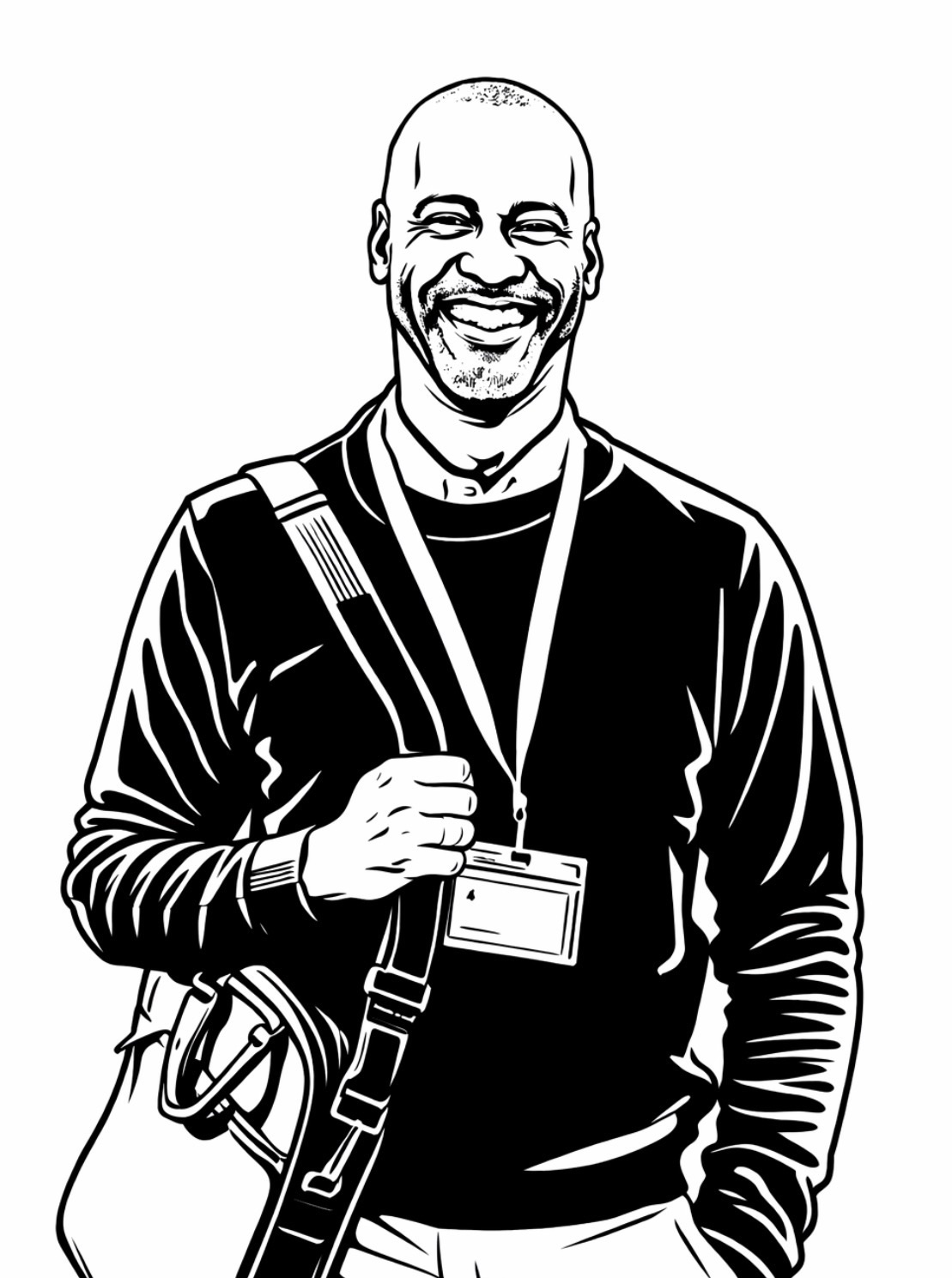
But I was not really there for Mumbai. I was there, like everyone else, to spend the weekend inside that familiar, air-conditioned world of speaker sessions, lanyards, coffee queues, exhibition stands, branded merch, and my overly ambitious hopes of finding some gold to bring back to school.
That is part of the appeal, of course. Conferences bring together people who would not otherwise meet, offering the chance to hear something that inspires us or to come up with a possible solution to something we have been grappling with back home (the list is long).
In the end, Mumbai delivered for me. I caught up with old friends, met new people, heard from Adam Voigt and Dr Yuhyun Park, who were both excellent, and bought a book I did not need but was pleased to bring home.
And yet I still left with a strange feeling. Not because this conference was especially different from any other. In many ways, it was exactly what conferences usually are. It was simply that, despite all the networking and the keynotes, it became obvious to me that I had not done the conference particularly well.
The Conference Dance
At one point, I found myself half-listening to a conversation nearby.
“Hi, I’m X.”
“Hi, I’m Y.”
“So, where are you working?”
“What country is that in?”
“And what role do you do there?”
“Oh, do you know Z?”
“Where were you before that?”
There was nothing wrong with it. In fact, it was entirely normal.
But once I noticed it, I started seeing it everywhere. In the coffee queues, by the vendor stands, in between sessions with the mass migrations of people moving from one ballroom to the next carrying our notebooks, phones, and conference tat. Conversation after conversation seemed to settle into the same dance routine: school, country, role, mutual contact, previous post. One person leads. Then the other goes. Same steps. Same choreography. Same same.
The irony was hard to miss. Much of the networking and many of the sessions took place in ballrooms. In that sense, then, the venue was fantastically well chosen.
What bothered me was not that people were talking. It was that so many conversations felt less like enriching encounters and more like acts of professional profiling. You came away knowing where someone lived and worked, what they did, and perhaps who they knew, but not necessarily anything much more.
Stuck in the Middle
I enjoy small talk. Small talk does useful work. It helps people settle and makes it easy to get to know each other.
And I do not mind serious talk either. Serious talk is why I am prepared to travel long distances to meet in person. That is the conversation about what is changing, what is difficult, what has gone badly, what has gone unexpectedly well, and what nobody seems to have solved yet, but perhaps we might start to think through together.
The trouble is the middle talk.
It’s not trivial in the way small talk can be. Rather, it uses professional language (schools, roles, systems, contacts, career history, etc.) to make it sound as though something important is being exchanged. Often, though, it is little more than people working out where to place one another.
Middle talk isn’t conversation. It’s more akin to classification.
In a busy conference setting, titles and school names act as social shortcuts. They help us orient ourselves. They help us decide how to pitch the conversation. They help us guess whether this is somebody from our sort of world or a very different one.
In that sense, it starts to feel less like a professional exchange and more like speed dating.
This profiling might be an inevitable, even necessary, part of a networking conversation, but it should not be the point. The longer we spend in the middle talk, the less curious we become. The questions tend to narrow, and the conversation circles inward instead of outward.
Small talk provides a way in. Middle talk provides the orientation. But it is the big talk that we came for.
And I noticed I was spending too much time playing in the middle. I certainly wasn’t alone.
Better Questions
Part of the reason this troubled me is that, in another part of my professional life, I know better.
In recruitment, a CV matters. So does the pen picture. So does first impression. But none of those things is the point. They provide colour and context, but never a determination. If we are doing the job properly, we use them to prepare better questions. And, as with generative AI, we don’t want them to do all the thinking for us.
We know how easy it is to be overly impressed by the title, the prestigious school, the impressive career journey. But we also know (or should know) that the profile is not the person.
So why, in a profession that has worked so hard to reduce bias in hiring, would I revert to it so easily in conversation?
The longer I sit with that question, the more uncomfortable I get. I think conferences can be invaluable professional learning experiences, but that means I don’t want to drift from one professional summary to another. I want to spend time with people who ask me questions, offer ideas, give warnings, and suggest possibilities.
And that means knowing how and when to move beyond the comfortable middle talk, to the messier, more valuable thinking on the other side of it.
It requires a small act of courage.
Am I ready to say where we feel stuck and ask if others have seen something that might help us think better?
Am I ready to name the tension we are trying to hold and ask what others are doing well?
Am I ready to ask what people are actually doing about plagiarism, workload, or communication overload right now?
Those are different conversations. They require someone to think with you, not simply exchange credentials.
That is what I want more of. Less middle talk.
Not less friendliness or less warmth. Conferences would be poorer without the chat in the corridor, the conversation over coffee, or the later conversation over a beer in the bar. But there is a difference between beginning lightly and never really moving beyond that moment.
What Conferences Are For
This matters especially, I think, in leadership. The longer you do the work, the more you are expected to sound as though you have answers. So we get good at neatly summarising our schools. We learn how to sound like we know what we are doing.
But some of the most useful conversations I had in Mumbai were not with people who gave the most polished account of themselves or their schools. They were with people who said, in one way or another, that they had not yet “cracked that nut”.
Despite my reflections here, I find that strangely reassuring.
Perhaps the point is not to leave a conference having met people, but having thought better.
Discover more from Serendipities
Subscribe to get the latest posts sent to your email.
 Serendipities